

 (703) 426-4000
When Winter Hits Frederick, Is Your Commercial Roof Ready?
Winters in Frederick don’t play around. Some years it’s all ice. Other years it’s heavy snow, constant freeze-thaw cycles, and wide temperature swings in the same week. For homeowners and property managers alike, this kind of weather puts serious stress on a roof—especially commercial roofs that often go overlooked until there’s a problem.
Whether you own the building or manage it for someone else, the question is the same: Can your roof get through this winter without leaking, cracking, or causing costly damage inside?
We’ve been inspecting and repairing commercial roofs in this region for more than three decades. And in our experience, most cold-weather issues don’t come from a single storm. They build up over time—small things that weren’t caught early, or repairs that weren’t built to last through winter.
Here’s what we’ll walk through in this post:
- What a winter-ready commercial roof actually looks like
- The most common issues we see this time of year
- What to do before spending money on repairs or upgrades
- How to prevent damage through maintenance and material choices
- How AWS Restorations handles winter prep for commercial buildings
If you’re not sure what kind of shape your roof is in, schedule a free inspection. We’ll give it a full look and explain what’s worth paying attention to—no pressure.
Why Cold Weather Roofing Matters More Than It Gets Credit For
Commercial Roofs Take a Different Kind of Beating
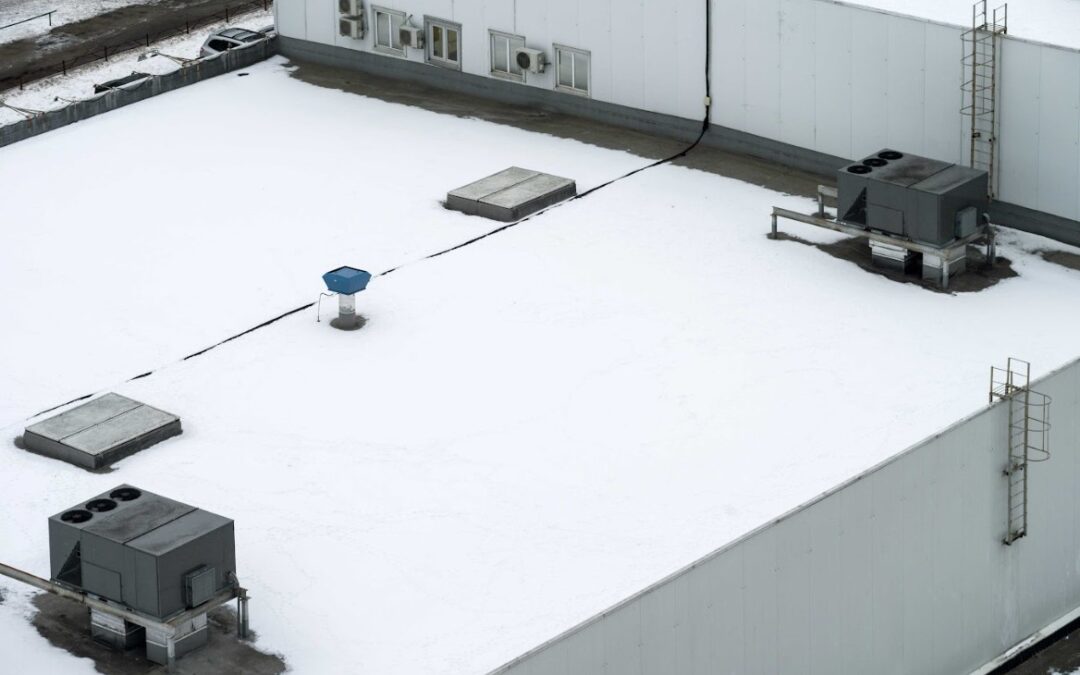
Flat and low-slope commercial roofs are built differently than pitched residential ones. That difference makes them more vulnerable during cold months—especially when snow or water doesn’t drain quickly. The freeze-thaw cycle is especially tough. Water gets into small cracks or seams, freezes overnight, and expands. That repeated stress can lead to leaks, pulled seams, or even damage below the membrane.
We’ve seen more than a few leaks start from something as simple as pooled snow that turned into ice near a roof drain.
Frederick’s Winters Make It Worse
This area sees a fair amount of winter inconsistency. You’ll get a cold snap, then a warm-up that melts snow, followed by another freeze. That constant shifting puts pressure on materials that aren’t flexible—or were never installed to handle those conditions in the first place.
If you manage or own a building in Frederick, you already know how important it is to stay ahead of seasonal damage. And winter is one of those seasons that can expose every weakness your roof already had.
Before You Make Any Repairs, Know These Things
We always recommend having a full inspection done before spending on any winter prep or roof repair. But there are a few things worth knowing either way.
Know Your Roof System
Every roofing material handles winter differently. For example:
- Modified bitumen does well in cold, but seams and flashing still need to be checked
- Older TPO or EPDM can shrink in cold weather and may pull at the seams
- Built-up roofing (BUR) holds up well structurally, but may show surface bubbles or signs of trapped moisture
- Metal roofing sheds snow easily, but condensation can cause internal problems if insulation isn’t done right
The more you know about the type of roof you’re working with—and how old it is—the easier it is to make the right decision.
Budget and Scope Matter
Not every issue means a full replacement. Sometimes a targeted repair or a better drainage solution is all you need to get through winter safely. We’ve helped plenty of business owners avoid unnecessary replacement by fixing the problem at the source. If you’re planning long-term improvements, winter prep might be the first phase of a broader project.
For bigger projects, we handle permits and help with long-term planning. If cash flow is tight, we do offer “No payment until the roof is done” on a case-by-case basis.
Get a Baseline Inspection
Even if your roof looks fine from the ground, it’s worth having it looked at up close before winter sets in. Small issues now can become expensive problems once snow and ice are involved. Our team offers free inspections for commercial properties. We’ll give you photos, an honest report, and straightforward recommendations.
5 Signs Your Commercial Roof Isn’t Ready for Winter
If you spot any of these issues, it’s a good idea to call in a professional before the first real snow.
1. Standing Water That Stays for Days
Water that sticks around for more than 48 hours on a flat roof isn’t just a drainage issue. When it freezes, it can push apart seams, crack the membrane, or add weight that your roof isn’t built to carry.
2. Visible Separation at Seams
Even small openings at seams or flashing can let moisture in. As that water freezes and expands, the separation gets worse. These are the places where leaks tend to show up first.
3. Clogged or Slow Roof Drains
If drains are blocked by debris or aren’t pitched correctly, melting snow can’t move. That water refreezes and causes ice buildup around the drain or along the edge of the roof.
4. Surface Bubbles or Blisters
These are usually signs of moisture trapped under the membrane. In freezing conditions, those spots are likely to tear or separate—especially during a thaw.
5. Past Repairs That Were Never Rechecked
We see this one a lot. A patch might look fine at first, but if it wasn’t done with the right materials or wasn’t sealed properly, it could fail in winter conditions.
If it’s been a while since your last inspection or you’re unsure where to begin, our earlier post on The Importance of Commercial Roof Maintenance covers how to build a simple maintenance plan that keeps problems small and manageable.
What Winter-Ready Really Looks Like
A winter-ready roof doesn’t mean brand new. It means stable, sealed, and able to handle moisture and temperature changes without failing.
Common Systems and How They Hold Up
| System | Pros in Winter | Things to Watch |
| Modified Bitumen | Flexible and sealed in layers | Older seams may pull with freeze-thaw |
| TPO/EPDM | Lightweight and reflective | Shrinking or cracking in cold temperatures |
| BUR | Multi-layer durability | Blisters from trapped moisture |
| Metal Roofing | Snow sheds easily | Condensation and seam gaps if insulation is poor |
Roof Coatings and Maintenance
A coating isn’t a cure-all, but it can buy time and improve waterproofing if applied correctly and at the right temperature. It’s not a substitute for good drainage or structural integrity.
Warranty Gaps to Look Out For
Manufacturer warranties often come with maintenance requirements. If inspections haven’t been documented or small repairs were skipped, coverage might not apply. We help property owners protect their warranty terms by doing proper inspections and giving written documentation when it counts.
Energy Efficiency Adds Up
If your building loses heat through the roof, you’ll see it in your winter utility bills. Insulation and sealing go hand-in-hand with winter protection. These improvements help both with comfort and long-term cost savings.
Common Cold Weather Roofing Questions for Frederick Property Owners
If you’re responsible for a commercial building in or around Frederick, winter brings a specific set of concerns. Below are some of the most common questions we hear this time of year, especially from owners and managers looking to avoid costly surprises as temperatures drop.
Do I need to remove snow from a flat roof?
Yes, flat roofs should be cleared of snow if accumulation becomes excessive. Snow can add significant weight, especially when it’s wet or starts to refreeze. If your roof already has drainage issues or signs of sagging, it’s safest to remove the snow before it causes structural stress or leaks.
How often should a commercial roof be inspected?
A commercial roof should be inspected at least twice a year—once in the fall and again in the spring. These seasonal inspections help catch small issues like seam separation or drainage blockages before they become larger problems during winter or summer extremes.
Are roof coatings effective in winter?
Roof coatings can help with winter performance, but only if applied in the right conditions and on a roof that’s otherwise in good shape. Coatings improve waterproofing and UV resistance but won’t fix structural issues or active leaks. They’re best used as part of a proactive maintenance plan.
What type of commercial roofing material performs best in winter?
Modified bitumen roofing generally performs best in cold weather when properly installed and maintained. It’s flexible, holds up well to freeze-thaw cycles, and provides good waterproofing, especially for flat or low-slope roofs common in commercial properties.
What’s included in a winter roof inspection?
A winter roof inspection includes a detailed check of seams, flashing, drainage areas, membrane condition, and signs of ponding water or trapped moisture. At AWS Restorations, we provide photos and a clear summary so you know what’s working, what needs attention, and what doesn’t require immediate action.
Do I need a permit for roof work on a commercial building in Frederick?
You need a permit for major commercial roof work in Frederick, such as full replacements or structural changes. Routine maintenance and small repairs usually don’t require permitting. If a permit is needed, we handle it so the project stays compliant and on schedule.
Why Winter Is the True Test of a Commercial Roof
In our experience, winter doesn’t break a roof. It exposes what was already starting to fail. And if there’s one thing we’d tell every building owner or property manager in Frederick, it’s this: don’t wait for a leak before paying attention to your roof.
At AWS Restorations, we’ve been inspecting, repairing, and replacing commercial roofs in this region for more than 30 years. We’re a GAF Certified contractor with an A+ rating from the BBB, and we’ve earned the Angie’s List Super Service Award by sticking to a simple approach. Do the work right, explain it clearly, and stand behind it.
We don’t recommend full replacements unless they’re actually necessary. We don’t talk over people’s heads or bury the details in fine print. And once the work is done, we’re still here.
If you’re unsure how your roof will handle the rest of winter, a free inspection is a practical place to start. Schedule one today, and we’ll help you understand what your roof really needs this season. Nothing more. Nothing less.